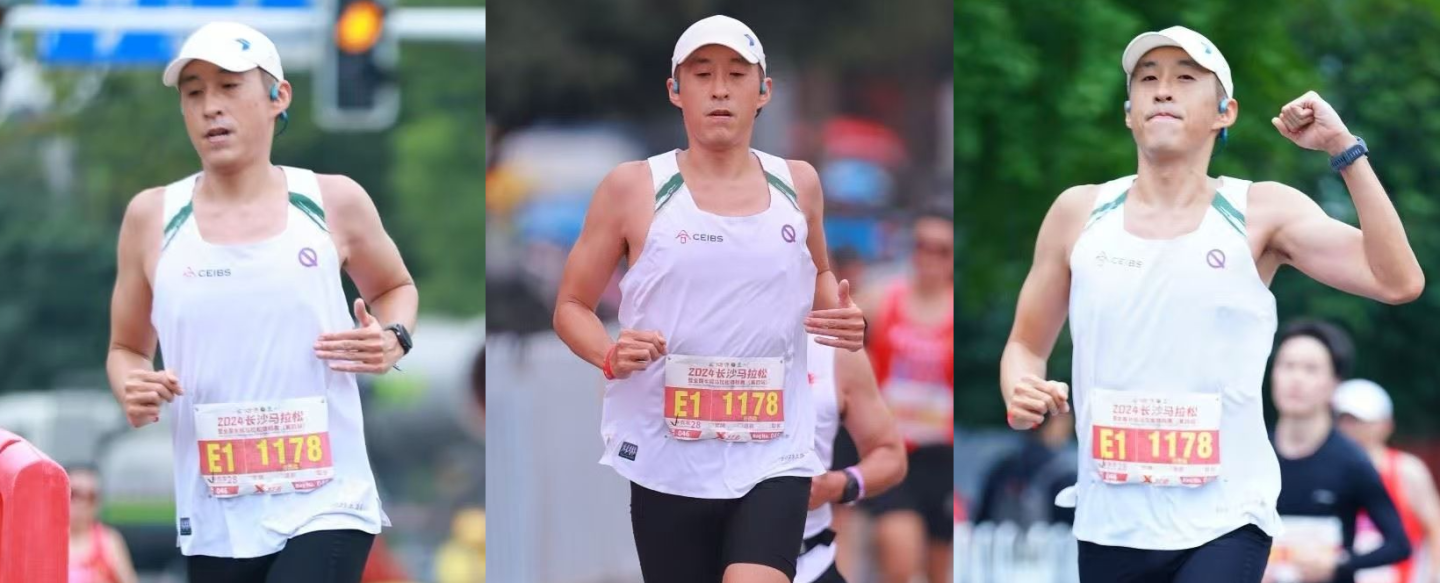
This is a post about running. This is not a post about running.
The motivation and the fire
I ran my first half-marathon 20 years ago.
I don’t remember why I signed up to run. I just did.
And it was excruciatingly painful. Everything hurt, even my jaws.
I finished in just under 3 hours.
—
I ran my first marathon a year ago. I wrote about it here.
Work was stressing me out; I started running again to claim some normality back into my life. Running became my constant; the space in the mornings for myself.
Thoughts formed: I’m going to run the marathon one time, just to prove that I can finish.
A marathon is 42.195 kilometers, or 26.2 miles. It is not a trivial distance to run.
I finished my first marathon in five and a half hours. I walked the last 10 kilometers due to leg cramps.
And it was excruciatingly painful. Everything hurt, even my pride.
—
I’m a stubborn mofo. When I hit a wall, I want to get back to that same wall…
And smash it.
It’s been that way with many competitive pursuits. Even with my two failed startup companies.
I attempted another marathon in March of this year. I performed better, but still experienced the cramping problem.
I achieved, however, the goal of running a sub-5 hour marathon! I was very happy.
I’m not just stubborn; I’m also rarely satisfied.
I started thinking: I can do better than that.
At the very least: I should be able to run a marathon the whole way, without cramping.
For the next 6 months, I ran 1,500 kilometers.
6 weeks ago, I started training with a structured program, with the assistance of a friend, Kate, who became my running coach.
Which takes me to my most recent marathon — the Changsha marathon in Hunan province, China.
Race preparations
The best part about training hard for 6 weeks, leading into the marathon, is that I started to peak at the right time. This gave me confidence — and confidence is half the battle.
During these 6 weeks, I ran Personal Bests (PBs) in all of these distances:
- 1 kilometer
- 5 kilometers
- 10 kilometers
- 21 kilometers (half-marathon distance)
This put me into a good headspace heading into the race.
I was breaking through and feeling stronger than ever. I ran a 330-kilometer month to conclude the training; I stayed injury-free.
My mantra became “trust the process.” Trust the process, and trust the progress.
The night before
I flew from Shanghai to Changsha the day before the marathon for race package pickup and preparations.
I didn’t load up on my usual assortment of carbs like pasta or pizza, as I was invited to a Chinese-style dinner. Still, I ate as much carbs as I could and went to bed at around 9:30pm.
Everything felt good. It’s not what you do the day before the race — it’s the days, weeks, and months of accumulated effort.
To be a long-distance runner is to buy into the notion that everything compounds. It’s what allows us to weather the storm on the bad days; the why-the-hell-am-I-running-thirty-kilometers-on-a-Sunday-morning days.
All things considered, a day doesn’t really matter. Even the race itself doesn’t truly matter when placed within a lifetime of running. It is a blip on the radar.
Running is life; life is running. We run because we enjoy it. We enjoy the level-up and challenges.
The race is the celebration of the training. To be all-in on the race results is a recipe for disaster.
Yes, I’m going to give it my all in the moment, but I also need to let go once that moment has passed.
The morning of
As usual, I wake up before my 5:30am alarm rings. I have had a tendency to wake up earlier due to anxiety and strange dreams.
Work took its toll on my mental, or at least, I think that’s the root cause of my dreams. My Garmin watch has reported some low sleep scores; my sleep quality isn’t ideal.
I fuel up with some breakfast, dress, pack my gear, and head on over to the starting point.
7:43am
I take an energy gel 5 minutes before the race begins.
7:48am
The race begins. I set out alongside 45,000 other marathoners in the early hours of the morning. Not that early, actually, as I’ve already been awake for 2.5 hours.
I’m pumped up. The weather is just below 20 degrees Celsius — perfect.
The game plan that I had rehearsed in my head was this:
- Run a negative split, i.e. run the back half of the marathon faster than the first half. Over the past 6 weeks I completed a fair share of training runs this way. It’s not how you start, but how you finish.
- Don’t blow up early – run the first 21 kilometers conservatively, at a 6’00″/km pace. I believed I could do this because I ran a 5’45″/km pace half marathon in “testing.” My coach wanted me to go out faster at a 5’00”-5’30” pace, but I didn’t think I could do that. Kate, I appreciate that you had more faith in me than I did.
- Run the first 21 kilometers and see how I felt. If I felt good, gradually speed up to reach a 5’45″/km pace by the final kilometer.
- Fueling strategy: take an energy gel every 30 minutes. Take two salt tablets every 60 minutes. I conducted my training long runs while taking exactly the same brand of supplements as I had on race day. It was a matter of being consistent and acclimating my digestive system to the race fuel.
- Celebrate a 4:15:00 finish.
Easy peezy, right? Everyone has a plan until you get punched in the mouth.
Getting punched in the proverbial mouth
The first 21 kilometers felt great. I averaged a 5’55″/km pace, like clockwork.
Trust the process.
After 21 kilometers, I sped up into the 5’30”-5’40” pace range.
In hindsight, this was a mistake. I should have increased my speed more gradually. The racing adrenaline made me overestimate my abilities. I was EXCITED that the first half felt so smooth!
Running races is a matter of taking real-time risks with limited information. Things are easier to analyze in hindsight:
Of course I should have slowed down!
Of course I should have pushed myself harder, and ran faster!
The truth of the matter is that we have to push and hope it’s the right time, and that our bodies can hold up.
Zooming way out, the race is but one moment of one day of an entire lifetime. If I push and PB, I’ll have a milestone to celebrate. If I crash and burn, I’ll have another chance later.
No guts, no glory. I could play it safe, but then I’d leave regrets on the table of what might have been.
So I chose to push.
One of the mistakes that runners make is to believe that race results are deterministic. It’s a dangerous view to hold because it creates a spiral of entitlement.
Entitled people think: since I’ve worked so hard, I deserve a strong result.
I don’t believe I’m entitled to anything. I’m content with the idea that race day may not be my day. But I love the idea of pushing myself, and I made a split-second decision to do that.
Anyways, back to the actual race…
Things felt manageable for the next 6 kilometers. The 27 kilometer mark is when I started feeling heavy.
Warning signs kicked in. I started to over-compensate with longer strides. My running form got worse.
In running, everything compounds. Under fatigue, older bad habits come back. Forgetting to stay upright affects my core, which then affects how my legs land on the ground.
I stopped enjoying the moment. I stopped grinning. I stopped the positive self-talk.
Even though I was an eternity away from the finish line, I started thinking about how nice it would be to finish. As if I could magically teleport 13 kilometers to the end.
That’s not a good thing to think about, because it had nothing to do with the here and now.
I needed, badly, to focus on the here and now.
How do I make it to the next kilometer? How do I take things 5 kilometers at a time?
And when things get really tough…how do I take things 500 meters at a time?
My coach Kate advised me to think “one more kilometer.” Just focus on the immediate goal in front.
I call it chunking. Breaking things down into digestible chunks.
That 32 kilometer training run? Break it down into fourths: 8-8-8-8.
Easy. 8 kilometers at a time, repeat 3 times, rinse and repeat.
As I hit the wall again, I probably could have slowed down – to a walk, even – to collect my bearings. To tell myself to get back to 6’00” or even 6’15” pace.
Small missteps
These things didn’t ultimately matter too much, but I’m tracking them here so as to not repeat:
- Not tying my laces firmly enough, which made me re-tie at the 15 kilometer and 25 kilometer mark.
- Not going to the bathroom right before the race began, and having to duck into a bathroom at the 26 kilometer mark. Cost me about 2-3 minutes.
- Dry swallowing the salt tablets without water, when no water station was around, which caused discomfort and even choking/coughing at times. It also affected my mental. I started thinking, “did those tablets go down the chute or did they get stuck in my throat?” I could have just taken them slightly earlier or later than every 60 minutes, to line up with whenever water was available.
- Not slowing my pace when I swallowed the gels. This cost me one time when I ripped the seal incorrectly because I was in a hurry, and I had to squeeze longer and harder (that’s what she said!) to get the gel out. Another time, I was breathing hard while swallowing the gel, and this caused some mild choking. In the long run (ha, ha!) it’s worth slowing down to rip open and consume the gels, because that’s what I did in training and my body was used to it.
Blowing up…and finishing
Around the 29 kilometer mark, I blew up. Right thigh started cramping, and I had a mild panic for about a minute.
I didn’t think about why it happened, in the moment. But in hindsight, it was my pacing. I was too optimistic about my pace relative to my fitness. I had convinced myself that I was fitter than I really was.
Always remember one thing: respect the marathon.
Respect the marathon, or it will swallow you whole.
Fortunately, my mental state was improved from the past two marathons:
- I convinced myself that I could finish the race at a slower pace. Not by walking it out, which would have been the kiss of death. Mentally, I knew that my brain would advise me to stop the race had I walked for too long.
- Quitting no longer became an option. I could run on a cramped thigh much more reasonably than a cramped calf (what I had in past races), so it was about navigating my form and slowing down when appropriate.
- I calibrated my goal to: let’s run a 4 hour, 30 minute marathon. Yes, it’s an arbitrary number. But let’s make an honest try at it.
- I maintained the same fueling strategy: gel and tablet intake every 30 and 60 minutes, respectively.
- I went back to the chunking strategy. I had 12 kilometers to go, so let’s break it down to 4-4-4. Only think about the next 4 kilometers. Once it was reached, repeat. Knowing what types of tricks to play on my mind was key.
- From past experience, I knew that drinking more water was not going to solve the cramping problem. I just ran my race and avoided some of the remaining water stations, as it was more important to hold on to my momentum rather than slow down at the stations. The water stations became illusory places of relief, because I could slow down to drink, but they wouldn’t make me feel (significantly) better. Rather, the gels and tablets were more effective, and I carried those with me.
I’ll spare you the pace graphs, but my overall pace for the whole marathon was a 6’25” kilometer, and I was running at a 6’00” kilometer for the first half. So I pretty much ran 6’50” kilometer pace for the back half.
Negative split pacing plan? Down the drain. Down the tubes!
But let’s keep things in perspective. I’m very happy to have completed the marathon at 4:31:58, twenty minutes faster than my previous fastest time. A bona fide PR, with a LOT of killer hills in this course, unlike the last 2 marathons I ran.
(4:31:58 was the ‘official’ finish time reported by the race, whereas 4:32:14 was the time I tracked on my watch and posted to Instagram. I received the official time a few hours after the race, so it turned out that I was a full 16 seconds faster than I originally thought!)
I wanted desperately to gun it, to leave nothing in the tank, in the final 2 kilometers.
But I decided not to, because I will have another chance to prove myself soon (more on that later).
And truth be told, the final 700 meter stretch of the race was Yet Another Brutal Uphill Climb, so I decided not to kill myself to hit that 4:30:00 target.
Yes, I was (and still am!) bummed out about the cramps. I think the big culprit was not improper fueling, but overall fitness and running form. I needed to slow down more and to remind myself to run with better form.
I also need to improve my core and lower body strength. Yes Kate, you were right! I needed to hit the weights more.
I’ll run the Nanjing marathon in a month, on a flat and cooler course, for another shot at glory. The Hong Kong marathon in February also beckons with its ridiculous killer hills, but I’m not thinking about that right now.
It would also be fun to sign up for, and crush, a few half-marathons in the process.
Final results:
- First marathon – 5:35:34 (October 2023)
- Second marathon – 4:52:59 (March 2024)
- Third marathon – 4:31:58 (October 2024)
Thanks for reading, and if there’s one thing you should take away from my ramblings, it’s this:
Trust the process.
Take care and be well.
 James Hsu
2 Pingbacks